About Course
Lean Logistics & Six Sigma in Supply Chain Training Course
Introduction
The Lean Logistics & Six Sigma in Supply Chain Training Course is a powerful, results-driven program designed for professionals who aim to eliminate waste, improve process efficiency, and boost service levels across logistics and supply chain operations. As global competition intensifies and customer expectations rise, companies must adopt proven methodologies like Lean and Six Sigma to streamline workflows, reduce variability, and enhance overall supply chain performance. This course equips participants with practical tools to drive continuous improvement, reduce costs, and build a culture of operational excellence.
Lean Logistics focuses on value creation by eliminating non-value-adding activities, while Six Sigma ensures process consistency and quality through data-driven problem solving. Together, these methodologies empower supply chain professionals to analyze, improve, and control logistics processes from end to end. Participants will learn how to apply Lean and Six Sigma tools such as value stream mapping, 5S, DMAIC, Kaizen, and statistical analysis to real-world supply chain challenges, resulting in measurable business impact.
Target Audience
- Supply Chain and Logistics Managers
- Process Improvement and Lean Specialists
- Warehouse and Distribution Supervisors
- Quality Assurance Professionals
- Procurement and Inventory Controllers
- Operations and Production Managers
- Continuous Improvement and Six Sigma Practitioners
Duration
5 Days
Course Objectives
- Understand Lean principles and Six Sigma methodology in supply chain operations
- Identify and eliminate waste in logistics processes
- Apply DMAIC and Lean tools to solve supply chain problems
- Improve efficiency, accuracy, and throughput across logistics functions
- Reduce variability and defects in supply chain processes
- Increase customer satisfaction through better quality and responsiveness
- Use data analytics and KPIs to measure and sustain improvements
- Foster a continuous improvement culture within supply chain teams
Course Content
Course Content
Module 1: Introduction to Lean and Six Sigma in Supply Chain
- Principles of Lean thinking and Six Sigma
- Role of continuous improvement in logistics
- Lean vs. traditional logistics models
- Types of supply chain waste and inefficiencies
- Integration of Lean and Six Sigma frameworks
Module 2: Value Stream Mapping and Waste Elimination
- Mapping current vs. future state value streams
- Identifying bottlenecks and process delays
- Lean tools for waste elimination (7 wastes)
- Enhancing material and information flow
- Visual management and process transparency
Module 3: DMAIC Methodology and Root Cause Analysis
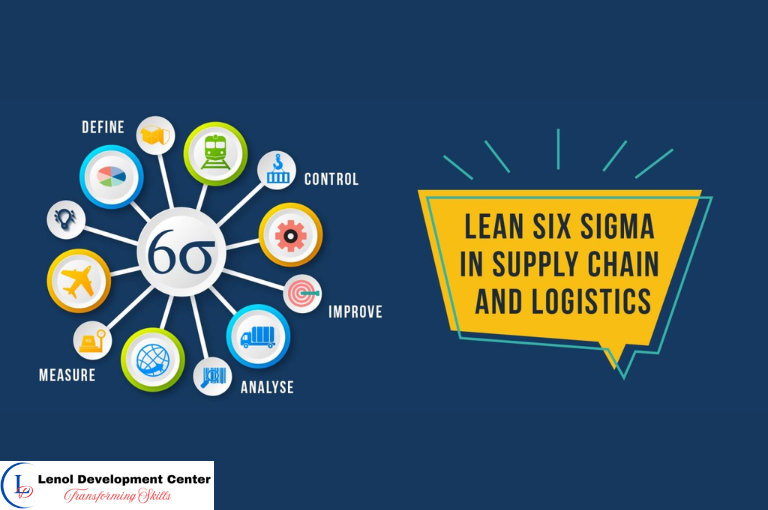
- Overview of Define, Measure, Analyze, Improve, Control
- Problem definition and project chartering
- Data collection and performance metrics
- Root cause identification techniques (5 Whys, Fishbone)
- Solution development and pilot testing
Module 4: 5S, Kaizen, and Standard Work
- Implementing 5S for workplace organization
- Kaizen events and rapid improvement workshops
- Developing and sustaining standard operating procedures
- Eliminating variation through process control
- Engaging teams in improvement initiatives
Module 5: Inventory and Warehouse Optimization
- Lean inventory management strategies
- Demand-driven replenishment and pull systems
- Warehouse layout and space utilization
- Reducing picking errors and order cycle time
- Streamlining receiving, storage, and dispatch
Module 6: Transportation and Distribution Efficiency
- Lean principles in transport planning
- Route optimization and load consolidation
- Carrier performance and lead time reduction
- Minimizing dwell time and empty miles
- Tracking and improving delivery accuracy
Module 7: Measuring Performance and Sustaining Results
- Key performance indicators in Lean logistics
- Statistical tools for monitoring improvements
- Control charts and process capability analysis
- Cost-benefit analysis of improvement projects
- Continuous audit and review cycles
Module 8: Building a Lean Six Sigma Culture in Supply Chain
- Leadership commitment and strategic alignment
- Training and skill development across teams
- Change management for Lean adoption
- Recognition and reward for improvement results
- Embedding CI into supply chain governance
General remarks
General remarks
- Customizable courses are available to address the specific needs of your organization.
- The participant must be conversant in English
- Participants who successfully complete this course will receive a certificate of completion from Lenol Development Center.
- The course fee for onsite training includes facilitation training materials, tea break and lunch.
- Accommodation and airport pick up are made upon request
- For any inquiries reach us through info@lenoldevelopmentcenter.com or +254 710 314 746
- Payment should be made to our bank