About Course
AI-Driven Records Classification and Retrieval Training Course
Introduction
The growing volume and complexity of records and data in organizations pose significant challenges in classification, retrieval, and management. Traditional methods of record classification can be time-consuming and prone to errors. Artificial intelligence (AI) is revolutionizing records management by enabling automated, intelligent classification and retrieval processes that enhance efficiency, accuracy, and accessibility.
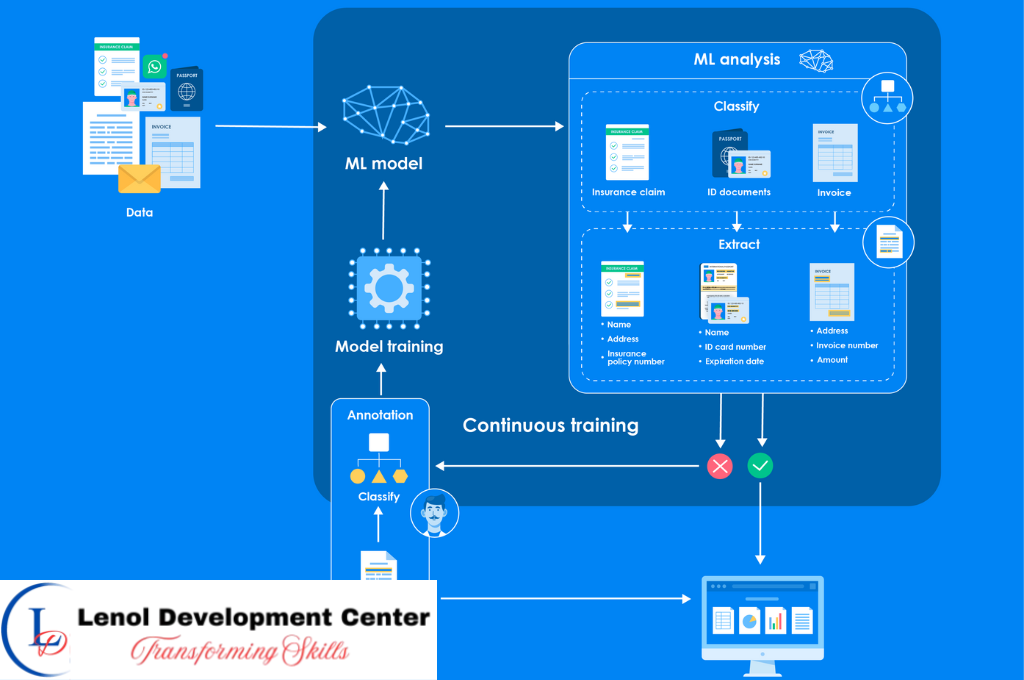
This course explores how AI can be applied to records classification and retrieval, providing organizations with the tools and strategies to optimize their recordkeeping systems. Participants will learn about machine learning models, natural language processing (NLP), and other AI technologies that can improve the automation and accuracy of records management processes.
Target Audience
This course is designed for:
- Records managers and information officers
- IT professionals involved in records management systems
- Data scientists and AI specialists working in records and information management
- Compliance and governance officers
- Digital transformation leaders
- Legal professionals managing document and data retrieval
- Archivists and data privacy professionals
Course Objectives
By the end of this training, participants will be able to:
✅ Understand the role of AI in records classification and retrieval
✅ Implement AI-powered systems for automating the classification of records
✅ Leverage machine learning and natural language processing (NLP) for better searchability
✅ Design and integrate AI-based solutions for efficient records retrieval
✅ Ensure accuracy, compliance, and security in AI-driven records management
✅ Measure the performance and effectiveness of AI systems in records management
✅ Stay updated with emerging trends and innovations in AI for records management
Duration
5 days
Course Content
Course Modules
Module 1: Introduction to AI in Records Management
- Overview of AI and its applications in records management
- The challenges in traditional records classification and retrieval
- Benefits of using AI technologies to enhance records management efficiency
Module 2: Machine Learning and AI for Records Classification
- Fundamentals of machine learning (ML) for classification tasks
- Supervised vs. unsupervised learning in records classification
- Implementing machine learning models for automated document classification
- Training data, accuracy, and validation techniques
Module 3: Natural Language Processing (NLP) in Records Retrieval
- Introduction to natural language processing (NLP) and its role in records retrieval
- Text analysis, sentiment analysis, and entity recognition for document classification
- Search optimization using NLP algorithms to improve document retrieval
- Semantic search vs. keyword-based search
Module 4: AI-Driven Metadata Extraction and Tagging
- The role of metadata in improving records classification and retrieval
- AI techniques for automatic metadata extraction (e.g., image recognition, OCR)
- Ensuring accurate tagging and indexing for better discoverability
- Managing metadata in AI-powered systems
Module 5: Integrating AI into Existing Records Management Systems
- Assessing existing systems and identifying opportunities for AI integration
- Designing workflows for AI-driven records management (from ingestion to retrieval)
- Best practices for combining AI with traditional records management tools (e.g., document management systems, ECM)
- Case studies of AI integration in records management
Module 6: Ensuring Compliance and Security in AI-Powered Systems
- Data privacy regulations and their impact on AI-driven records management (GDPR, HIPAA, etc.)
- Ensuring compliance with retention policies using AI
- Security challenges and strategies in AI-based systems (e.g., data breaches, unauthorized access)
- Ethical considerations in using AI for records management
Module 7: Performance Evaluation and Optimization of AI Systems
- Key performance indicators (KPIs) for measuring AI systems in records management
- Evaluating the accuracy, speed, and efficiency of AI classification and retrieval systems
- Fine-tuning AI models for continuous improvement
- Techniques for handling false positives and negatives in AI predictions
Module 8: The Future of AI in Records Management
- Emerging trends in AI for records management (e.g., deep learning, AI-enhanced search engines)
- The role of AI in improving compliance, accessibility, and user experience in records management
- Preparing for the future of AI in records management: opportunities and challenges
General remarks
General remarks
- Customizable courses are available to address the specific needs of your organization.
- The participant must be conversant in English
- Participants who successfully complete this course will receive a certificate of completion from Lenol Development Center.
- The course fee for onsite training includes facilitation training materials, tea break and lunch.
- Accommodation and airport pick up are made upon request
- For any inquiries reach us through info@lenoldevelopmentcenter.com or +254 710 314 746
- Payment should be made to our bank