About Course
Control Theory for Climate Modeling Training Course
Introduction
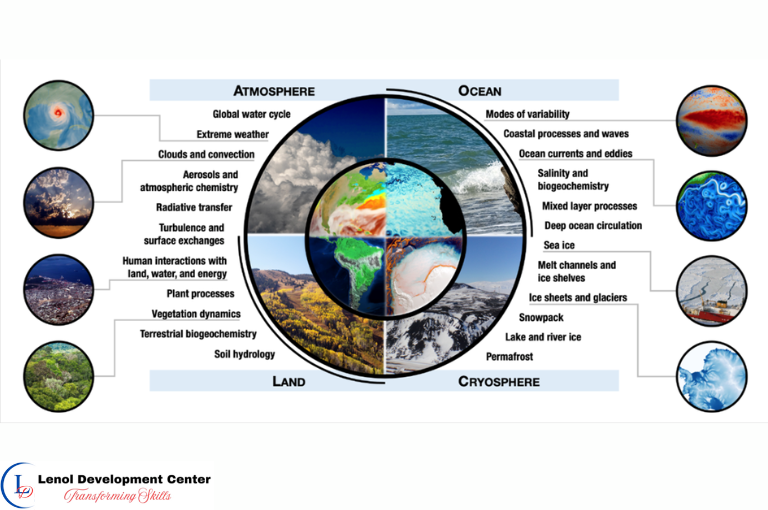
The Control Theory for Climate Modeling Training Course is an advanced and highly specialized program designed for climate scientists, engineers, data analysts, and systems theorists seeking to apply control theory principles to improve the accuracy, efficiency, and predictability of climate models. As climate systems become increasingly complex and nonlinear, the integration of control theory offers a powerful framework for modeling dynamic feedback loops, uncertainty, system responses, and adaptive interventions in climate projections.
This course delivers hands-on experience in the application of feedback control, optimal control, system identification, and adaptive control strategies within the context of climate science. Participants will explore how control algorithms can support real-time data assimilation, optimize climate intervention strategies, and improve predictive modeling of Earth systems. Whether working in research, climate risk assessment, policy design, or geoengineering simulations, this training offers cutting-edge insights into the intersection of climate modeling and advanced mathematical control systems.
Target Audience
- Climate modelers and atmospheric scientists
- Systems engineers and control theorists
- Environmental data scientists and analysts
- Researchers in earth system science
- Policy developers in climate intervention and geoengineering
- University faculty and postgraduate students in climate or engineering
- Professionals working in climate-tech innovation and simulation
Duration
5 Days
Course Objectives
- Understand the fundamentals of control theory as applied to climate modeling
- Explore feedback mechanisms and system dynamics in Earth systems
- Apply optimal and robust control methods in climate simulations
- Integrate control theory into data assimilation and model calibration
- Analyze the stability and observability of nonlinear climate models
- Evaluate the role of control systems in climate intervention scenarios
- Use control-based techniques to improve forecasting accuracy
- Design model-driven decision tools for adaptive climate governance
Course Content
Course Content
Module 1: Introduction to Control Theory and Climate Systems
- Overview of climate dynamics and modeling challenges
- Fundamentals of control theory and system behavior
- State-space models and climate system representation
- Linear vs. nonlinear systems in climate modeling
- Relevance of feedback control in climate processes
Module 2: Feedback Mechanisms and Dynamic System Modeling
- Climate feedback loops and tipping points
- Time-delay systems and dynamic climate responses
- Positive vs. negative feedback modeling
- Energy balance models and radiative forcing control
- Coupled atmosphere-ocean system behavior
Module 3: Optimal and Robust Control Techniques
- Linear Quadratic Regulator (LQR) applications
- H-infinity and robust control under uncertainty
- Multi-objective optimization in climate systems
- Trade-offs between performance and resilience
- Applications in emission control pathways
Module 4: Observability and Controllability in Climate Models
- Controllability and observability in nonlinear systems
- Kalman filters and state estimation in climate science
- Sensitivity analysis and observability indices
- Model reduction techniques for large-scale systems
- Control-based system diagnostics
Module 5: Data Assimilation and Model Calibration
- Real-time data integration into climate models
- Sequential estimation and adaptive filtering
- Bayesian data assimilation frameworks
- Parameter tuning using control inputs
- Uncertainty quantification and error reduction
Module 6: Climate Intervention and Geoengineering Control
- Modeling solar radiation management (SRM)
- Aerosol injection and albedo modification modeling
- Optimal control in carbon dioxide removal scenarios
- Constraints, ethics, and risk analysis in geoengineering
- Dynamic feedback regulation for interventions
Module 7: Control Theory in Forecasting and Prediction
- Enhancing short- and long-term forecast accuracy
- System identification and learning models
- Predictive control in climate event modeling
- Integration of AI with control algorithms
- Climate early warning systems
Module 8: Designing Control-Based Decision Tools
- Translating control outputs into policy insights
- Interactive simulation models for decision-makers
- Adaptive policy frameworks based on control feedback
- Interfacing models with climate governance tools
- Building user-friendly, scientifically grounded interfaces
General remarks
General remarks
- Customizable courses are available to address the specific needs of your organization.
- The participant must be conversant in English
- Participants who successfully complete this course will receive a certificate of completion from Lenol Development Center.
- The course fee for onsite training includes facilitation training materials, tea break and lunch.
- Accommodation and airport pick up are made upon request
- For any inquiries reach us through info@lenoldevelopmentcenter.com or +254 710 314 746
- Payment should be made to our bank