- +254710 314 746
- info@lenoldevelopmentcenter.com
- Westpark towers 8th floor mpesi lane-off muthithi road,Westlands
Records Management in the Cloud Training Course
Introduction
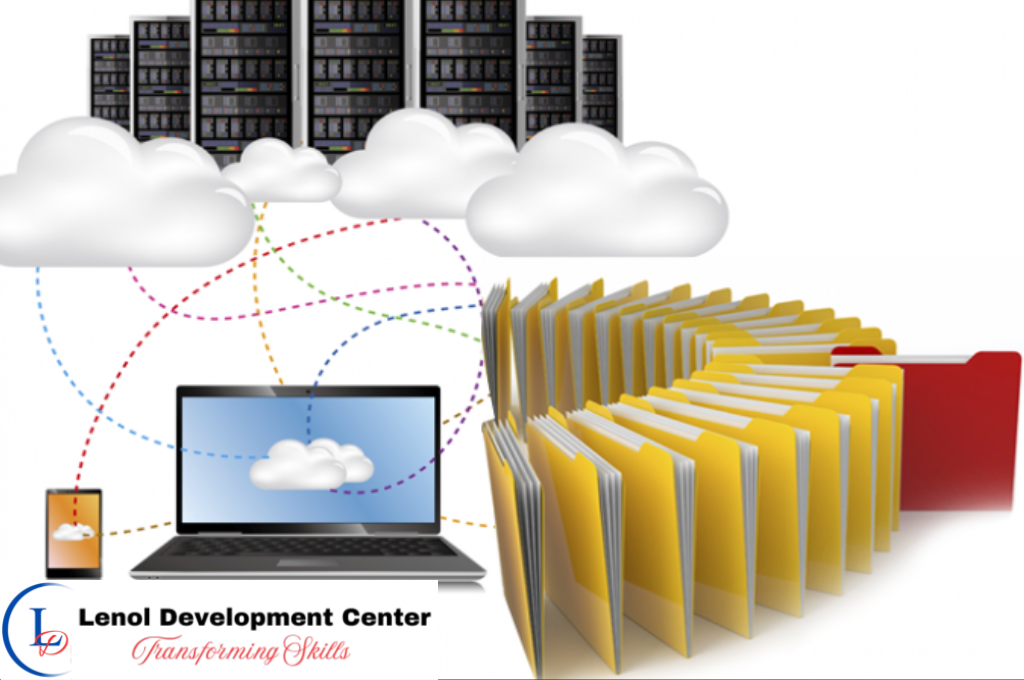
As organizations increasingly move their records and information management systems to the cloud, they face new challenges and opportunities. Cloud-based records management enhances accessibility, scalability, and collaboration but also introduces concerns around security, compliance, and data sovereignty.
This course provides an in-depth understanding of how to effectively manage records in cloud environments. Participants will learn best practices for cloud storage, data security, compliance with legal and regulatory requirements, and strategies for integrating cloud-based records management into organizational workflows.
Target Audience
This course is designed for:
Course Objectives
By the end of this training, participants will be able to:
✅ Understand the fundamentals of records management in cloud environments
✅ Evaluate cloud storage solutions for records retention and compliance
✅ Implement security controls to protect records from cyber threats
✅ Ensure compliance with regulations like GDPR, HIPAA, and ISO 27001
✅ Develop strategies for integrating cloud records management into existing workflows
✅ Address risks related to data sovereignty, access control, and disaster recovery
Duration
5 days
Course Modules
Module 1: Introduction to Cloud-Based Records Management
Module 2: Cloud Storage and Records Retention
Module 3: Security and Privacy Considerations
Module 4: Compliance and Legal Considerations
Module 5: Integration and Interoperability
Module 6: Disaster Recovery and Business Continuity
General remarks
Start & End Date | Location | Fee (USD) | Register |
Aug 3- Aug 7, 2026 | Nairobi | 1,500 | |
Aug 24- Aug 28, 2026 | Pretoria | 4,950 | |
Sep 7- Sept 11, 2026 | Nairobi | 1,500 | |
Sep 21- Sept 25, 2026 | Mombasa | 1,850 | |
Oct 5- Oct 9, 2026 | Nairobi | 1,500 | |
Oct 5- Oct 9, 2026 | Kigali | 2,950 | |
Nov 2- Nov 6, 2026 | Nairobi | 1,500 | |
Nov 23- Nov 27, 2026 | Dar es Salam | 2,950 | |
Dec 7- Dec 11, 2026 | Nairobi | 1,500 | |
Jan 5- Jan 9, 2027 | Kigali | 2,950 | |
Jan 26- Jan 30, 2027 | Mombasa | 1,850 | |
Feb 2- Feb 6, 2027 | Nairobi | 1,500 | |
Feb 2- Feb 6, 2027 | Pretoria | 4,950 | |
Mar 2- Mar 6, 2027 | Nairobi | 1,500 | |
Mar 23- Mar 27, 2027 | Dar es Salaam | 2,950 | |
Apr 6- Apr 10, 2027 | Nairobi | 1,500 | |
Apr 20- Apr 24, 2027 | Nairobi | 1,500 | |
May 4- May 8, 2027 | Mombasa | 1,850 | |
May 25- May 29, 2027 | Nairobi | 1,500 | |
Jun 1- Jun 5, 2027 | Kigali | 2,950 | |
Jun 22- Jun 26, 2027 | Nairobi | 1,500 | |
Jul 6- Jul 10, 2027 | Dar es Salaam | 2,950 |
Start & End Date | Fee (USD) | Register |
July 27 – July 31, 2026 | 800 | |
Aug 3 – Aug 7, 2026 | 800 | |
Aug 24 – Aug 28, 2026 | 800 | |
Sept 7 – Sept 11, 2026 | 800 | |
Sept 21– Sept 25, 2026 | 800 | |
Oct 5 – Oct 9, 2026 | 800 | |
Oct 26 – Oct 30, 2026 | 800 | |
Nov 9 – Nov 13, 2026 | 800 | |
Dec 7 – Dec 11, 2026 | 800 | |
Jan 5- Jan 9, 2027 | 800 | |
Jan 26- Jan 30, 2027 | 800 | |
Feb 2- Feb 6, 2027 | 800 | |
Feb 23- Feb 27, 2027 | 800 | |
Mar 2- Mar 6, 2027 | 800 | |
Mar 23- Mar 27, 2027 | 800 | |
Apr 6- Apr 10, 2027 | 800 | |
Apr 20- Apr 24, 2027 | 800 | |
May 4- May 8, 2027 | 800 | |
Jun 1- Jun 5, 2027 | 800 | |
Jun 22- Jun 26, 2027 | 800 | |
Jul 6- Jul 10, 2027 | 800 |
The growing volume and complexity of records and data in organizations pose significant challenges in classification, retrieval, and management. Traditional methods of record classification can be time-consuming and prone to errors. Artificial intelligence (AI) is revolutionizing records management by enabling automated,
Open data and knowledge sharing are key pillars for driving transparency, innovation, and collaboration in both public and private sectors. By making data and knowledge freely accessible,
Change management is a critical aspect of any transformation process, especially when it involves the implementation of new knowledge and records management systems.
Effective records management in healthcare is crucial for ensuring patient safety, compliance with regulations, and operational efficiency. With the increasing digitization of medical records,
Innovation thrives in environments where knowledge is effectively managed, shared, and leveraged. Knowledge Management (KM) is essential for fostering creativity, driving continuous improvement, and maintaining a competitive edge.
The exponential growth of data in today’s digital world presents both opportunities and challenges for organizations. Big Data—characterized by its volume, velocity, variety, and complexity—requires innovative approaches to records management to ensure data is organized, accessible, secure, and compliant with regulatory requirements.
In an era where data is one of the most valuable assets for organizations, effective Information Governance (IG) is essential to ensure data is managed responsibly, securely, and in compliance with regulatory requirements. Information Governance Frameworks provide a structured approach to managing information assets, balancing risk, compliance, and value creation.
In the digital age, governments worldwide are transitioning to electronic governance (e-Governance) to improve transparency, efficiency, and public service delivery. Effective records management is critical for ensuring compliance, security, and accessibility of government records in this digital transformation.
WhatsApp us